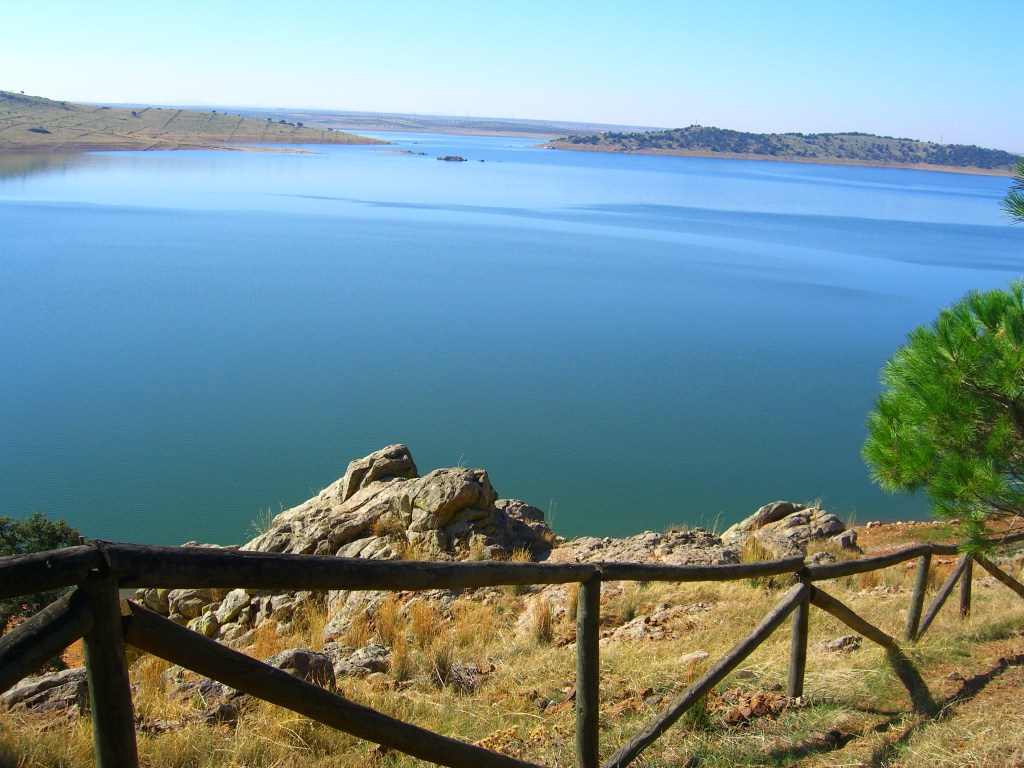
Alange, enclavada en las últimas estribaciones de Peñas Blancas, junto al embalse y presa a los que da nombre, es una localidad privilegiada por su enclave natural donde siempre predomina la presencia de agua, y la riqueza patrimonial que le ha otorgado su situación geográfica. Se encuentra próximo a Mérida, y cercana al trazado de la Vía de la Plata se presenta como una población equidistante a tres grandes capitales: Madrid, Sevilla y Lisboa.
Encontramos vestigios de varias épocas, entre ellos Las Termas Romanas que constituyen el monumento histórico artístico más relevante y conocido de Alange. Fueron declaradas en los años 30 Monumento Nacional, ostenta el título de Patrimonio de la Humanidad otorgado por la UNESCO y siguen en funcionamiento en la actualidad. Se encuentran ubicadas en el interior del Balneario.
El Castillo de la Culebra, fortaleza de origen árabe que data del siglo IX. Estuvo ocupado hasta el siglo XVI, cuando trasladaron la sede a la Casa de la Encomienda, que aún se conserva en el centro de la población. Este cerro es un enclave ideal para practicar deportes de aventura y para la observación de aves y orquídeas.
La Iglesia de Ntra. Sra. de los Milagros, del siglo XVI y estilo mudéjar, las ermitas de San Gregorio y San Bartolomé que rinde culto a la Virgen Milagrosa, patrona de Alange.
También encontramos un Granero de la Edad del Bronce próximo al castillo y podemos disfrutar de dos bonitos miradores “La Pata del Buey” y “El cristo”.
El Embalse de Alange está formado por tres ríos: Matachel, Palomillas y Valdemedel, conforma, la Zona Especial de Protección para las Aves “Sierras Centrales y Embalse de Alange”, preferido por los amantes de la ornitología y los aficionados a la naturaleza. En él se practican todo tipo de deportes acuáticos y de aventura.
Entre sus fiestas cabe destacar las Fiestas Patronales de la Virgen Milagrosa, 12 de septiembre con su tirada de fuegos artificiales en el agua y los Carnavales que desde hace una década se encuentran en auge.
En cuanto a su gastronomía es muy variada, con platos típicos como las ancas de ranas, migas, caldereta, caracoles, revuelto de espárragos trigueros y la rosca de piñonate entre otros.
Alange, which is enclosed on the last foothill of Peñas Blancas – close to the reservoir and dam which are named the same as the hill-, it is a privileged town due to its natural settlement where the presence of water always predominates as well as the wealth patrimonial given by its geographical location. It is located next to Merida, and near the route of Via de la Plata, 300km far from Seville, Madrid and Lisbon evenly apart.
We find vestiges from different ages, among them we highlight the Roman Baths which are the most important historical-artistic monuments of Alange. They were awarded in the 30´s as National Monument, they hold the title of World Heritage awarded by UNESCO. At present, they are located in The Balneario and open to visitors.
The Castillo de la Culebra (Castle of the snake), fortress of arabian origin from the IX century, was occupied until the XVI century, when they moved the headquarters to Casa de la Encomienda. It currently remains in the centre of the town. This hill is an ideal settlement to practice adventure sports and to observe a large amount of birds or orchids.
The most important religious buildings include the Nuestra Señora de los Milagros church, which is from the XVI century and it is a typical mudéjar style building, and both ermitages of San Gregorio and San Bartolomé (the last one worships for Virgen Milagrosa, patron saint of Alange).
We found a barn from the bronze age next to the castle where we can enjoy beautiful sightseeing as “La Pata del Buey” and “El Cristo”.
The reservoir of Alange receives water from three rivers: Matachel, Palomillas and Valdemedel, and it is classified Z.E.P.A (Special protected bird area) “Sierra Centrales y Embalse de Alange”. This place is well known by bird watchers and nature lovers, where water and adventure sports are held.
There are several important celebrations as the Patron Saint Day on the 12th September, when fireworks at the water can be seen. Carnavales (carnival) are widely celebrated since over a decade. In relation with their varied gastronomy, plenty of typical meals as frog’s legs, breadcrumbs, lamb stew, snails, wild asparagus scramble or rosca de piñonate are culinary delicacies.
 las13villasdelguadiana